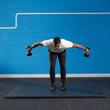
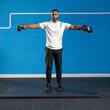
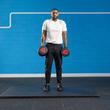
Try an alternative shoulder exercise
If you want to hit every head of the deltoid, take a look at some of these exercises.

If you’re looking for a great dumbbell shoulder exercise that not only builds strength but also supports everyday function, the dumbbell shoulder press could tick all of the right boxes. This is one of the most effective exercises to target and sculpt your upper body while improving stability and posture.
In this guide, we’ll break down exactly how to perform a dumbbell shoulder press, the muscles it works, its key benefits, and tips for getting the most out of your workout.
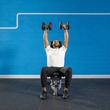
The dumbbell shoulder press is a resistance exercise where you press a pair of dumbbells overhead from shoulder height, either while seated or standing. It primarily targets the deltoid muscles in your shoulders and requires core activation to stabilise your body throughout the movement.
Unlike barbell or machine presses, the dumbbell shoulder press allows for a greater range of motion, helping to address muscular imbalances in the upper body and promote joint health.
If you want to hit every head of the deltoid, take a look at some of these exercises.
The dumbbell shoulder press is a favourite among trainers for its effectiveness in developing strength, endurance, and shoulder definition. The exercise activates the following muscles:
Primary muscles
Anterior deltoids (front of the shoulder)
Medial deltoids (middle part of the shoulder)
Secondary muscles
Triceps brachii (backs of the arms, which help with elbow extension)
Upper trapezius (helps stabilise the shoulders)
Upper pectorals (assists with pressing)
Core muscles (help maintain posture and stability throughout the lift)
Together, these muscles work to press the weight up and control it on the way down.
Incorporating dumbbell shoulder presses into your routine provides numerous benefits beyond bigger shoulders. For example, this exercise:
Improves upper-body strength: Enhances performance in pushing movements like lifting, throwing, or overhead work.
Builds muscle definition: Targets deltoids and triceps for a more sculpted upper body.
Enhances shoulder mobility: Promotes a full range of motion compared to machines.
Activates stabiliser muscles: Each arm moves independently, forcing smaller muscles to work harder for balance and control.
Reduces injury risk: Strengthens supporting muscles and joints, making shoulders more resilient.
Supports functional fitness: Strengthens movements you use in daily life, like placing items on high shelves or pushing heavy doors.
Start seated on a bench with back support or standing, feet shoulder-width apart.
Hold a dumbbell in each hand at shoulder height, palms facing forward.
As you inhale, push the dumbbells overhead until your arms are fully extended. Brace your core and keep a slight bend in your elbows. Avoid arching your lower back.
As you exhale, lower the dumbbells back to shoulder height slowly and with control. Avoid bouncing or jerking motions.
Depending on your training goals and the dumbbell weight, perform 8-12 reps for muscle growth or 4-6 reps for strength.
You can do this movement seated or standing. The seated dumbbell shoulder press helps to isolate the shoulder muscles, whereas the standing variation increases the demand on your core muscles and requires full-body coordination.
Alternatively, to keep your shoulder workouts fresh and target different muscles, try these shoulder press variations:
Arnold press: Start with your palms facing towards you and rotate them to face outwards as you press. A great exercise for targeting the front delts.
Single-arm dumbbell press: Instead of working both arms simultaneously, press with one arm at a time. This forces core engagement and balance, and is ideal for correcting muscle imbalances.
Neutral-grip press: Turn your palms inwards so that they face each other. This variation is kinder on the shoulders and wrists.
Form: Master Your Technique to prevent injury!

Keep a neutral spine and straight back—don’t lean back or overarch.

Your elbows should stay slightly in front of your shoulders, not flared out.

Control the movement through the entire range—don’t let gravity take over.

Always engage your core to stabilise your torso and protect your lower back.
Don’t swing or push with your legs unless you're doing a push press variation.
Build up gradually—proper form should always be prioritised over using heavier weights.
This can put stress on your lumbar spine and lead to injury.
Focus on keeping both arms in sync to avoid imbalances.

Find out the common mistakes that prevent people from losing fat effectively — and how to avoid them.
The dumbbell shoulder press is a fantastic exercise for experienced and novice lifters alike. Whether you’re building your upper-body strength or honing your shoulder definition, by incorporating the dumbbell shoulder press into your training, you’ll see powerful gains in both performance and posture.
Take your training to the next level with The Gym Group! Access state-of-the-art equipment and expert personal trainers who can guide you through this and other strength-building exercises safely and effectively. Find your nearest Gym today.