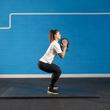
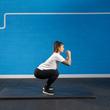
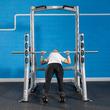
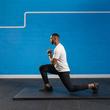
Need help perfecting your squats?
Depending on your needs and experience, you may also wish to work with a trainer to help you perfect your form, especially when you’re first starting out with barbell back squats.

Ever wondered what it would be like to exercise over 250 muscles at once? Odds are, you already have.
Squatting is a core part of most workouts, and the barbell back squat is a great way to target the quadriceps, hamstrings and glutes while also engaging your core, lower back, and calves.
Put simply, it’s a great way to grow your muscles and improve your postural strength—and well worth adding to your strength training routine if you haven’t already.
A barbell back squat is a compound exercise, where you lower into a squat while resting a weighted barbell on your upper back. It’s effectively a full-body workout, too, as your core and lower back stabilise the movement while your quadriceps, glutes, and hamstrings do the heavy lifting.
It’s a versatile exercise and is often used in bodybuilding, powerlifting, and as part of general exercise programs.
While barbell exercises, and particularly the back squat, are great for strength training and allow for significant weight loading, you can also start with small weights and work your way up to make sure you’re comfortable with the form. Improper bar placement or failing to maintain an upright chest can cause injuries if you aren’t cautious.
The key difference between a regular front squat and a back squat is where the weight is positioned:
Front squats mean you hold the bar across your shoulders, putting the emphasis on your quads, and are generally performed with lighter weights than a back squat. Your torso should remain upright and straight throughout a front squat.
Back squats position the bar on your upper back, allowing for heavier loads and more engagement from posterior muscles.
Barbell back squats are considered a core-strengthening movement and a full lower-body exercise due to the power and muscles they require.
The following are all engaged when you perform a barbell back squat:
✔ Glutes
✔ Hamstrings
✔ Quadriceps
✔ Calves
✔ Abdominal and core muscles
They’re an excellent way to build functional strength in all of these muscle groups, but particularly the quadriceps.
The barbell back squat is ideal for working with larger weights (though it’s recommended to start small and work your way up). It engages the most powerful muscles in the body, like the hamstrings, glutes, and quadriceps. Every time you increase the weight your muscles get a nice challenge, helping them build up over time.
This increased strength in your legs can also help when it comes to other lifts, like lunges, Olympic lifts, and deadlifts.
While the lower body is the focus, the back squat demands you engage your core and keep a stable spine under the load of the weights. Your core muscles in this case include spinal erectors, abdominal muscles, and obliques, all of which remain braced throughout the movement.
This exercise can strengthen your core and improve your posture over time, while keeping your body fit for a number of athletic and daily activities, from sitting at a desk to running marathons, good posture comes from good muscles, and comes with a lot of benefits.
The benefits of a barbell back squat don’t stop when you leave the gym; they carry over into real life, too. Proper form helps you to move more efficiently, with proper strength and control as a result of functional fitness.
Sitting, standing, getting up from the ground; all the movements you do in your day-to-day can be improved when you incorporate the barbell back squat into your exercise regime and deploy the proper posture throughout each repetition.
Mastering the barbell back squat starts with proper setup and alignment. It helps to focus on bar placement, your stance, bracing your core muscles, and making sure you nail the mechanics of each movement to effectively and safely perform each repetition.
1) Setting up the right stance:
Place the barbell directly on your shoulders, or hold it just above them (in the rack position). Grip the bar slightly wider than shoulder-width, and keep your torso straight—don’t lean forward during the exercise.
Tip: Your feet should be shoulder-width apart, toes turned out slightly, with your weight evenly distributed across both legs.
2) Brace and descend:
Take a deep breath, expand and engage your core. Stabilise your spine and don’t bend your lower back. Bend your knees to perform the squat itself.
Tip: Hinge at the hips at the same time as you descend, as if you’re about to sit on a chair—still keeping your torso straight, of course.
3) Depth and ascension:
Lower until your thighs are parallel with the ground, and then push through your heels, drive your hips forward while simultaneously extending your knees once again to return to a standing position. Exhale while keeping your core muscles engaged, and make sure you keep your chest tall and spine neutral throughout the movement.
Follow these tips to make sure you get the right squat posture every time:
✔ Set the bar properly, ensuring that it’s positioned evenly across your shoulders.
✔ Brace your core and ensure your torso stays straight, maintaining tension across each rep.
✔ Keep a neutral spine, and avoid over-arching or rounding your back.
✔ Track your knees and make sure you don’t lock your joints—let them move without collapsing inward.
✔ Maintain heel contact with the ground, especially when you ascend on each repetition, and don’t let your heels lift off the floor.
✔ Maintain control when you descend, and take care not to do it too fast.
✔ Drive through the hips, using the muscles there and in your legs rather than in your back.
✔ Use a mirror or spotter to double-check your form, as well as when working with heavier loads.
Depending on your needs and experience, you may also wish to work with a trainer to help you perfect your form, especially when you’re first starting out with barbell back squats.
While back squats are an effective way to train multiple muscle groups at once, they aren’t the be-all, end-all. If you have an injury or condition that causes weak joints, you might wish to try a variation or alternative after discussing with your fitness professional.
There are many ways to do a barbell back squat. You might wish to choose a favourite, or mix and match a few variations depending on your fitness goals:
High-Bar Back Squat: Similar to a regular barbell back squat, but the bar rests higher on the traps. This can require a more upright torso while still engaging the quads.
Low-Bar Back Squat: The bar rests lower, across the rear delts, resulting in more leverage. That means you can take on heavier weights and also bring more focus to your hamstrings, glutes, and hips during training.
Box Squat: Excellent for training control over the depth of your squats, you simply squat backwards onto a box or a bench. This variation also helps to reduce any stress on your knees.
Pause Squat: For those looking to build more strength than the standard squat, the pause squat requires you to pause at the bottom of your movement for 1-3 seconds before you ascend. This can also help you to improve your stability over time.
Tempo Squat: Timing is everything for a tempo squat, where you control your descent over a certain length of time (3-5 seconds, for example), and do the same for your ascent. This can help to improve your endurance while nailing your technique.
If the barbell back squat isn’t right for you, there are a few alternatives you can try that target the same group of muscles or reap similar benefits.
Goblet Squat: Squat while holding a weight at chest level (usually a dumbbell or kettlebell). This doesn’t require the heavy weights of a barbell back squat, but still mirrors the mechanics. Your spine may also thank you for the reduced load required!
Hack Squat: This requires a dedicated machine, and requires a little less focus on form as the machine ensures you stay in place throughout the exercise. The focus here is all on the quads, with less input needed from other muscles like the core and glutes.
Bulgarian Split Squat: This single-leg squat intensely targets your quadriceps and glutes while also building up your balance and stability with every repetition.
Leg Press: Similar to the hack squat, you’ll need a dedicated machine to add leg presses to your routine. This is ideal for hypertrophy or when barbell squats aren’t possible, as you can engage most of the same muscles without placing as much stress on your spine.
If you’re looking to improve your lower body strength and perfect your core posture, mastering the barbell squat is a good exercise to add to your regimen. When you experiment with different variations and focus on those that meet your fitness goals, you’ll develop excellent functional fitness both inside the gym and out.
If you’d like any further information, please get in touch with one of our expert personal trainers, or if you’re ready to jump into repetitions, find a gym near you.